

- University
- Academic
- Schools/Vocational Schools
- Vocational School of Justice
- Vocational School
- Vocational School
- Department of Banking and Insurance (Turkish)
- Department of Computer Programming (Turkish)
- Department of Foreign Trade (Turkish)
- Department of Graphic Design (Turkish)
- Department of Interior Design (Turkish)
- Department of Construction Technology (Turkish)
- Department of Occupational Health and Safety (Turkish)
- Department of Media and Communication (Turkish)
- Department of Architectural Restoration (Turkish)
- Department of Radio and Tv Programming (Turkish)
- Department of Civil Aviation Cabin Services (Turkish)
- Department of Civil Aviation Transportation Management (Turkish)
- Department of Tourism and Hotel Management (Turkish)
- Department of Applied English Translation
- Vocational School Of Health Services
- Vocational School Of Health Services
- Department of Child Development (Turkish)
- Department of Physiotherapy (Turkish)
- Department of Paramedic (Turkish)
- Department of Opticianry (Turkish)
- Department of Medical Documentation and Secreteriat (Turkish)
- Department of Medical Imaging Techniques (Turkish)
- Department of Medical Laboratory Techniques (Turkish)
- Department of Elderly Care (Turkish)
- School of Applied Management Sciences
- School of Foreign Languages
- Faculties
- Faculty of Arts and Sciences
- Faculty of Fine Arts and Design
- Faculty of Law
- Faculty of Communication
- Faculty of Business
- Faculty of Engineering
- Faculty of Engineering
- Department of Computer Engineering
- Department of Biomedical Engineering
- Department of Electrical and Electronics Engineering
- Department of Industrial Engineering
- Department of Food Engineering
- Department of Genetics and Bioengineering
- Department of Aerospace Engineering
- Department of Civil Engineering
- Department of Mechanical Engineering
- Department of Mechatronics Engineering
- Department of Software Engineering
- Faculty of Health Sciences
- Medicine
- Graduate School
- Common Courses
- Schools/Vocational Schools
- Research
- Research Centers
- Library
- Smart Campus
- Technology Transfer Office
- İzmir Sciencepark
- Continuous Education Center (EKOSEM)
- Children's University
- Ethics Committee
- Teaching and Learning Center (EKOEĞİTİM)
- Psychology Application and Research Center
- Researcher Training Coordinatorship
- Research Collaborations And Innovation Coordinatorship
- Campus
- INTERNATIONAL
- Contact
- 25TH YEAR
Medicine
MED 255 | Course Introduction and Application Information
| Course Name |
Visual Culture and Memory Projects
|
|
Code
|
Semester
|
Theory
(hour/week) |
Application/Lab
(hour/week) |
Local Credits
|
ECTS
|
|
MED 255
|
Fall/Spring
|
3
|
0
|
3
|
4
|
| Prerequisites |
None
|
|||||
| Course Language |
English
|
|||||
| Course Type |
Elective
|
|||||
| Course Level |
First Cycle
|
|||||
| Mode of Delivery | - | |||||
| Teaching Methods and Techniques of the Course | DiscussionGroup WorkLecture / Presentation | |||||
| National Occupation Classification | - | |||||
| Course Coordinator | ||||||
| Course Lecturer(s) | ||||||
| Assistant(s) | - | |||||
| Course Objectives | The aim of this course is to enable students to develop aesthetic perception and visual analysis skills and to use photography as a recording, memory and creativity tool in health sciences. |
| Learning Outcomes |
The students who succeeded in this course;
|
| Course Description | The invention of the camera is one of the most important discoveries of the 19th century. In a short time, many genres have emerged, from portrait to landscape, from documentary to fictional. Photography technology has become widespread throughout the world, and visual culture production, visual storytelling and visual literacy have become increasingly important. In this context, the use of photography as a recording tool has been evaluated in many disciplines. Photographic records of the past have become one of the important materials of memory studies. Neuroscience has begun to look at the functioning mechanism of the brain in an artistic context by making use of neuroaesthetics. This course covers enabling students to consider science and art as a new information and communication network and evaluating this new knowledge in health sciences. |
| Related Sustainable Development Goals |
|
|
|
Core Courses | |
| Major Area Courses | ||
| Supportive Courses |
X
|
|
| Media and Management Skills Courses | ||
| Transferable Skill Courses |
WEEKLY SUBJECTS AND RELATED PREPARATION STUDIES
| Week | Subjects | Related Preparation |
| 1 | Lesson introduction, observation and explanation | |
| 2 | History of 19th and 20th century photography | Ian Haydn Smith, “Fotoğrafın Kısa Öyküsü”. |
| 3 | Composition rules in photography | Faruk Akbaş, “Fotoğrafta Pratik Kompozisyon”. |
| 4 | Visual codes and image analysis | John Berger, “Görme Biçimleri”. John Berger, “Görme Biçimleri”. |
| 5 | The meanings of colors in culture, art and psychology | Pelin Gülşen, “Renkler: Tarih-Kültür-Sanat-Psikoloji”. Psychology section |
| 6 | The importance of photography and the photographer as a memory record | A. Abensour, “Memory”, p.80-86 |
| 7 | Visual perception and Neuroaesthetics | Oğuz Tanrıdağ, “Beyinde Estetik ve Sanat Hareleri”, section 4 |
| 8 | Artistic creativity and neuroart | Oğuz Tanrıdağ, “Beyinde Estetik ve Sanat Hareleri”, section 5 |
| 9 | Sensory memory: Smell, taste, visual, auditory, tactile | A. Abensour, “Memory”, p.165-172 |
| 10 | "Memory research: Collective and Cultural Memory | M.Emir İlhan, “Kültürel Bellek”, p. 58-69 |
| 11 | The relationship between family photographs and memory | Şahika Erkonan, Şahika Erkonan, “Aile Fotoğrafları”, DOI: https://doi.org/10.17572/mj2014.2.122147 |
| 12 | Lost memory: Seven ways of forgetting | Paul Connerton, “Seven Types of Forgetting”, in Memory Studies Volume 1 issue 1, 2008 https://journals.sagepub.com/doi/epdf/10.1177/1750698007083889 |
| 13 | Memory and brain in literature | Orhan Pamuk, “Masumiyet Müzesi”, Yapı Kredi. Summery |
| 14 | Student Presentations | |
| 15 | Student Presentations | |
| 16 | Semester review |
| Course Notes/Textbooks | |
| Suggested Readings/Materials | Alexandre Abensour, “Bellek”, Fol Kitap, 2022 ISBN-13 : 978-6258411607 Douwe Draaisma, “Bellek Metaforları”, Metis Yayıncılık, 2014. ISBN-13 : 978-9753426176 Faruk Akbaş, “Fotoğrafta Pratik Kompozisyon”. Say Yayınları, 2018. ISBN: 9754687071 Ian Haydn Smith, “Fotoğrafın Kısa Öyküsü”, Hep Kitap, 2018. ISBN-13 : 978-6051922416 Jan Assmann, “Kültürel Bellek”, Ayrıntı Yayınları, 2015 ISBN: 9789755392899 John Berger, “Görme Biçimleri”. Metis Yayınları, 2023. ISBN-13: 978-9753420839 Kolektif, “Zihinde ve Kültürde Bellek”, İş Bankası Yayınları, 2015 ISBN-13 : 978-6053323754 Maurice Halbwachs, “Kolektif Bellek”, Pinhan Yayıncılık, 2018 ISBN-13 : 978-6059460545 M.Emir İlhan, “Kültürel Bellek: Sözlü Kültürden Yazılı Kültüre Hatırlama”, Doğu Batı Yayınları, 2019. ISBN-13 : 978-6052133699 Oğuz Tanrıdağ, “Beyinde Estetik ve Sanat Hareleri”, Üsküdar Üniversitesi Yayınları, 2022. ISBN: 978-605-9596-64-0 Özge Özdemir, “Geçmişin İzleri: Altmışlı ve Yetmişli Yılların Kolektif Belleği”, İletişim Yayınları, 2023. ISBN-13 : 978-9750534898 Paul Connerton, “Seven Types of Forgetting”, in Memory Studies Volume 1 issue 1, 2008 https://journals.sagepub.com/doi/epdf/10.1177/1750698007083889 Pelin Gülşen, “Renkler: Tarih-Kültür-Sanat-Psikoloji”, Destek Yayınları, 2021. ISBN-13 : 978-6254411991 Şahika Erkonan, “Aile Fotoğrafları: Aile Belleğinin Kurgulanmasında Fotoğrafın Rolünü Etnografik Yöntemle İncelemek”, Moment Dergi, 2014. DOI: https://doi.org/10.17572/mj2014.2.122147 Türker Kılıç, “Yeni Bilim: Bağlantısallık, Yeni Kültür: Yaşamdaşlık”, Ayrıntı, 2023. ISBN: 978-605-314-504-2 |
EVALUATION SYSTEM
| Semester Activities | Number | Weigthing |
| Participation | ||
| Laboratory / Application | ||
| Field Work | ||
| Quizzes / Studio Critiques | ||
| Portfolio | ||
| Homework / Assignments | ||
| Presentation / Jury |
1
|
30
|
| Project |
1
|
70
|
| Seminar / Workshop | ||
| Oral Exams | ||
| Midterm | ||
| Final Exam | ||
| Total |
| Weighting of Semester Activities on the Final Grade |
2
|
100
|
| Weighting of End-of-Semester Activities on the Final Grade | ||
| Total |
ECTS / WORKLOAD TABLE
| Semester Activities | Number | Duration (Hours) | Workload |
|---|---|---|---|
| Theoretical Course Hours (Including exam week: 16 x total hours) |
16
|
3
|
48
|
| Laboratory / Application Hours |
18
|
0
|
|
| Study Hours Out of Class |
14
|
2
|
28
|
| Field Work |
0
|
||
| Quizzes / Studio Critiques |
0
|
||
| Portfolio |
0
|
||
| Homework / Assignments |
0
|
||
| Presentation / Jury |
1
|
10
|
10
|
| Project |
1
|
40
|
40
|
| Seminar / Workshop |
0
|
||
| Oral Exam |
0
|
||
| Midterms |
0
|
||
| Final Exam |
0
|
||
| Total |
126
|
COURSE LEARNING OUTCOMES AND PROGRAM QUALIFICATIONS RELATIONSHIP
|
#
|
Program Competencies/Outcomes |
* Contribution Level
|
|||||
|
1
|
2
|
3
|
4
|
5
|
|||
| 1 |
Knowledge of medical practices: Utilizes knowledge from basic and clinical medical sciences, epidemiology, biostatistics, biomedical informatics, and social and behavioral sciences to prevent, diagnose, treat, and manage medical problems. |
-
|
-
|
-
|
-
|
-
|
|
| 2 |
Competence in professional skills: Competence in Professional Skills: Possesses the basic medical skills and attitude necessary for practicing the profession, understands personal limits, evaluates own performance, identifies areas needing improvement, and implements these improvements within a plan. |
-
|
-
|
-
|
-
|
-
|
|
| 3 |
Patient Management: Provides patient-centered, holistic, safe, reliable, fair, and evidence-based healthcare services, prioritizing the protection and promotion of health, especially for the primary health issues in the community. Seeks support from other healthcare professionals and institutions when necessary, following the referral chain. |
X
|
-
|
-
|
-
|
-
|
|
| 4 |
Patient and Employee Safety: Delivers healthcare services with consideration for the health and safety of both patients and healthcare workers throughout diagnosis, treatment, and rehabilitation processes. |
-
|
-
|
-
|
-
|
-
|
|
| 5 |
Planetary Health and Healthy Lifestyles: Considers the impact of the planet's resources on individual and community health in professional practices. Takes it as a duty to inform the public, promote healthy lifestyles, and eliminate factors that negatively affect health. |
-
|
-
|
-
|
-
|
-
|
|
| 6 |
Information Management and Research: Explains the role and importance of scientific research and evidence in delivering high-quality and safe healthcare services. Analyzes health issues in the community using scientific methods. Utilizes information generated through research and accessed from accurate, reliable sources, by appropriately using information technologies, in evidence-based patient management processes. |
-
|
-
|
-
|
-
|
-
|
|
| 7 |
Adherence to Ethical Principles: Fulfills duties and responsibilities within the framework of ethical principles, rights, and legal obligations required by the profession, considering good medical practices and deontology principles. Recognizes ethical dilemmas and can analyze and make decisions accordingly. |
-
|
-
|
-
|
-
|
-
|
|
| 8 |
Professional Virtues: Avoids behaviors that could undermine public trust in the medical profession. Approaches patients with compassion, care, and empathy without discrimination, prioritizing their well-being over personal interests. Ensures the confidentiality and privacy of patient information. |
-
|
-
|
-
|
-
|
-
|
|
| 9 |
Health Policies and Advocacy: Assesses the impact of health policies on the health indicators of individuals and communities. Advocates for the development of healthcare services in line with social reliability and responsibilities. |
-
|
-
|
-
|
-
|
-
|
|
| 10 |
Protecting and Promoting Health as a Social Responsibility: Accepts the protection and promotion of community health as a social responsibility, identifies priority health issues in the community served, develops solutions, and provides health education and counseling services. |
-
|
-
|
X
|
-
|
-
|
|
| 11 |
Protecting and Promoting Health in Extraordinary Situations: Prioritizes the protection and promotion of individual and community health during extraordinary situations. Performs clinical and public health practices in a comprehensive and competent manner. |
-
|
-
|
-
|
-
|
-
|
|
| 12 |
Healthy Physician - Healthy Community: Pays attention to personal health, hygiene, safety, and appearance. Explains and implements measures for maintaining health, strategies for coping with stress, and preventing burnout to maintain a healthy life. Sets an example for colleagues and the community through personal practices. |
-
|
-
|
-
|
-
|
-
|
|
| 13 |
Change Management and Leadership: Systematically identifies issues and processes requiring change to provide high-quality, safe, and cost-effective healthcare services, along with the necessary resources. Acquires the skills to lead these changes effectively. |
-
|
-
|
-
|
-
|
-
|
|
| 14 |
Teamwork: Establishes positive communication with healthcare professionals and other occupational groups. Demonstrates effective feedback practices, adopts a supportive approach, understands and fulfills personal rights, duties, and responsibilities in a timely and appropriate manner, and takes on different team roles as needed. |
-
|
-
|
-
|
-
|
-
|
|
| 15 |
Communication Skills: Effectively uses written, verbal, and non-verbal communication. |
-
|
-
|
-
|
X
|
-
|
|
| 16 |
Communication for Qualified and Safe Healthcare: Engages with patients, their families, healthcare professionals, other occupational groups, institutions, and organizations to minimize patient safety risks, enhance the quality of healthcare, in clear, understandable, and professionally appropriate communication while involving patients in decision-making processes, and considering potential differences and needs while providing necessary information. |
-
|
-
|
-
|
-
|
-
|
|
| 17 |
Lifelong Learning: Uses self-assessment approaches to evaluate professional performance, identifies areas needing improvement, determines learning needs, and organizes personal learning processes to enhance professional knowledge and skills. |
-
|
-
|
X
|
-
|
-
|
|
*1 Lowest, 2 Low, 3 Average, 4 High, 5 Highest

NEWSALL NEWS


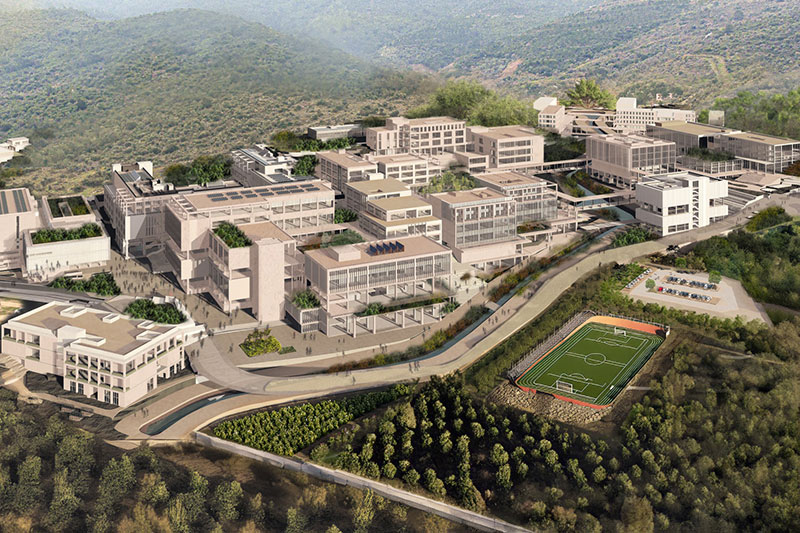
IZMIR UNIVERSITY OF ECONOMICS GÜZELBAHÇE CAMPUS
DetailsGLOBAL CAREER
As Izmir University of Economics transforms into a world-class university, it also raises successful young people with global competence.
More..CONTRIBUTION TO SCIENCE
Izmir University of Economics produces qualified knowledge and competent technologies.
More..VALUING PEOPLE
Izmir University of Economics sees producing social benefit as its reason for existence.
More..
You are one step ahead with your graduate education at Izmir University of Economics.